New E. coli case linked to preschool transmission in San Luis Obispo
By Atascadero News · Sun Nov 15 2026
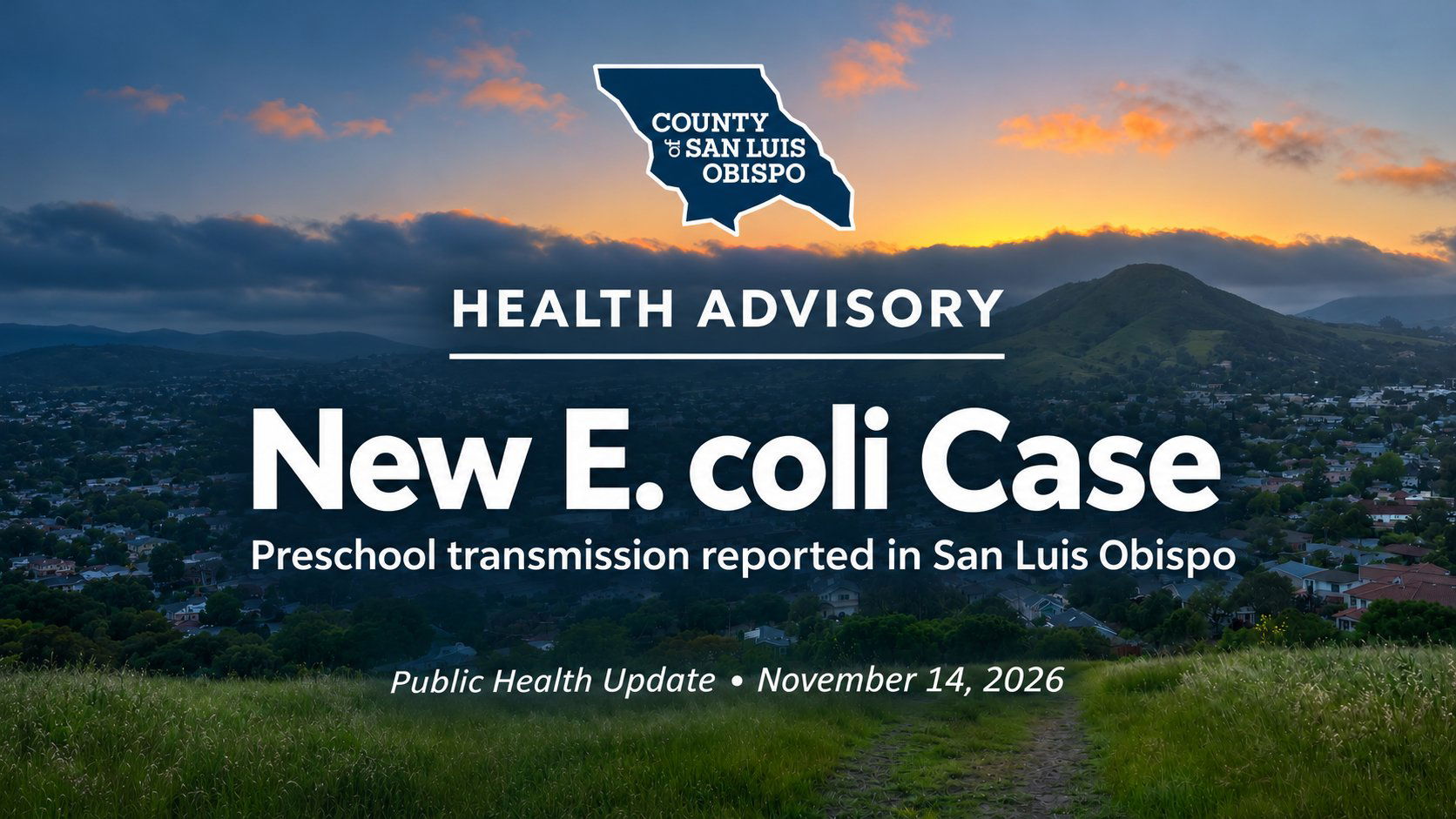
Patient recovering at home after hospitalization; county links infection to earlier Brookshire Farms-associated case
SAN LUIS OBISPO — San Luis Obispo County public health officials have confirmed an additional E. coli infection believed to have spread through person-to-person contact at a local preschool from a patient associated with the October Brookshire Farms outbreak. The newly identified patient did not visit Brookshire Farms, according to a Nov. 14 announcement from the county Department of Public Health. The individual developed hemolytic uremic syndrome, or HUS, a serious complication of Shiga toxin-producing E. coli infection, and was hospitalized. The patient is now recovering at home.
The department was notified by the patient’s medical provider, and the county Public Health Laboratory confirmed the infection was caused by E. coli O157. Investigators believe the individual contracted the infection through secondary transmission from one of the five previously identified primary cases associated with Brookshire Farms.
“Since the transmission is thought to have occurred at the school, families were notified, thorough cleaning protocols were initiated, and the affected classrooms will be closed on Monday,” County Health Officer Dr. Christy Mulkerin said. “The preschool has been working collaboratively with Public Health.”
The classroom closures were scheduled for Monday, Nov. 16.
The latest case follows the county’s investigation into infections among October visitors to Brookshire Farms. In its Nov. 6 update, Public Health reported that all five laboratory-confirmed patients had visited the farm Oct. 17 or 18. Another 10 people who visited between Oct. 16 and 26 and developed symptoms were classified as suspected cases.
Genetic testing showed that bacterial strains from three patients matched, supporting a common source of exposure. However, investigators did not identify the specific source of contamination.
Tests of food, water, and environmental samples collected at the farm did not detect E. coli O157. Other bacteria, including other strains of E. coli, were found in some samples, but those results did not identify the outbreak’s source.
County officials identified corn cups, pumpkins, hay, and nonpotable water sources as potential shared exposures among infected individuals. None was confirmed as the source. Officials also reported that no farm animals or petting zoos were available to the public on the premises.
The county said environmental testing was limited by several factors, including delays between exposure and sampling and the absence of some items available for testing. In its Nov. 6 announcement, Public Health said the risk of additional exposure associated with the original incident had passed.
The newly reported preschool case underscores the potential for the bacteria to spread between people.
HUS is a potentially life-threatening complication that can damage the kidneys and other organs. It occurs most often in young children. Symptoms of Shiga toxin-producing E. coli infection can include severe stomach cramps, diarrhea that may be bloody, vomiting, and sometimes fever.
Public Health advises anyone experiencing bloody diarrhea or severe abdominal cramps to contact a health care provider immediately. Children younger than 5, older adults, and people with weakened immune systems face a greater risk of serious complications.
To reduce the risk of infection, officials recommend washing hands thoroughly with soap and water after using the bathroom, changing diapers, or handling animals, and before preparing or eating food. Other precautions include washing produce, keeping raw foods separate from ready-to-eat foods, avoiding untreated water, and avoiding unpasteurized milk and juices.
The county also encouraged parents and caregivers to address children’s concerns through honest, age-appropriate conversations, familiar routines, and opportunities to ask questions. Changes in sleep, appetite, behavior, or mood can indicate stress.
Families seeking additional support can access BrightLife Kids, a free online support resource for parents and children ages 0 to 12, at brightlife.kids.